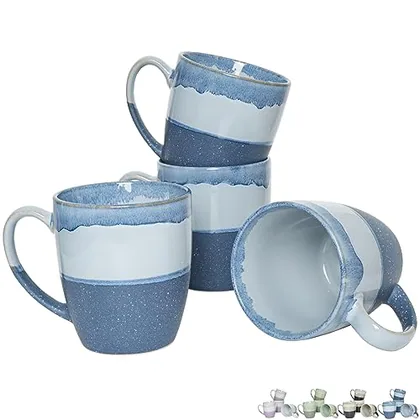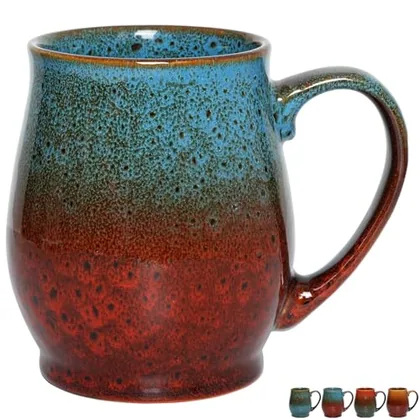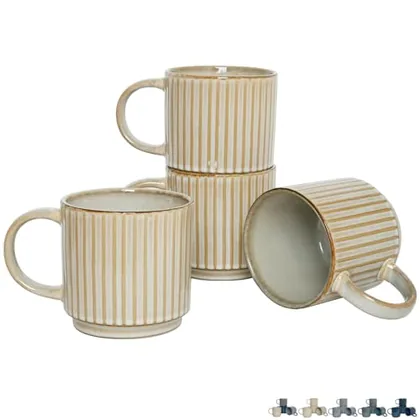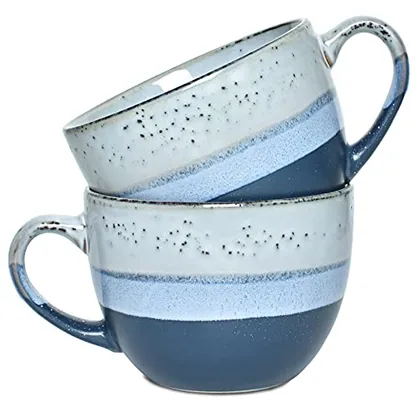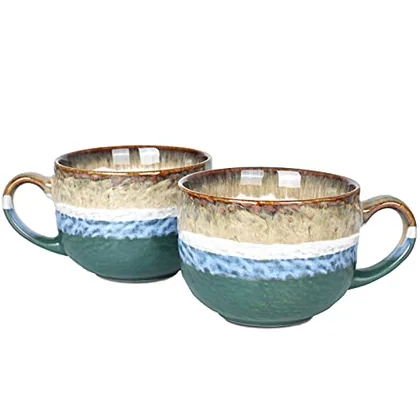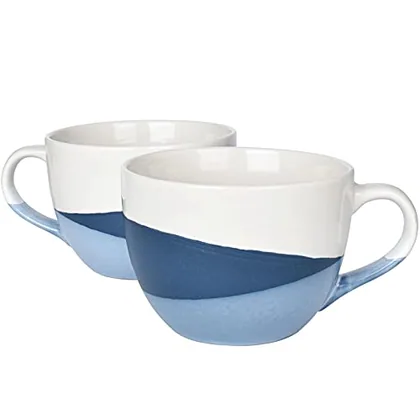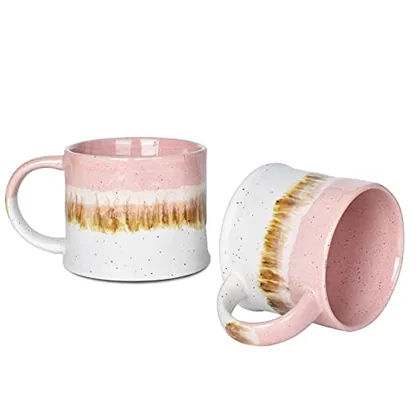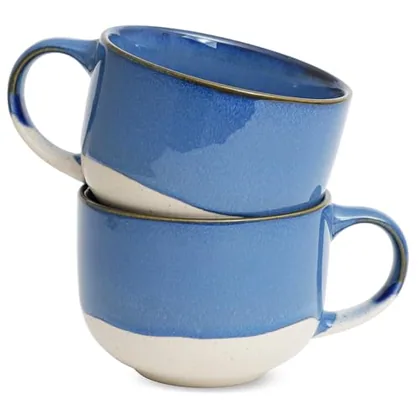


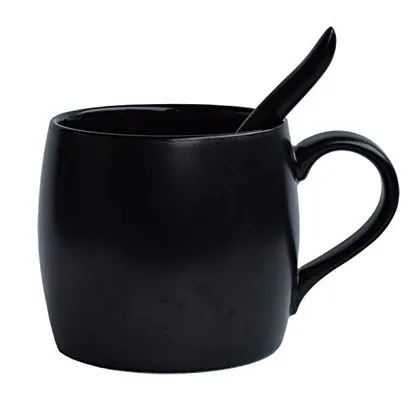
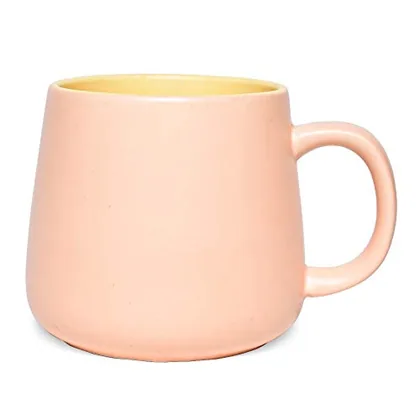
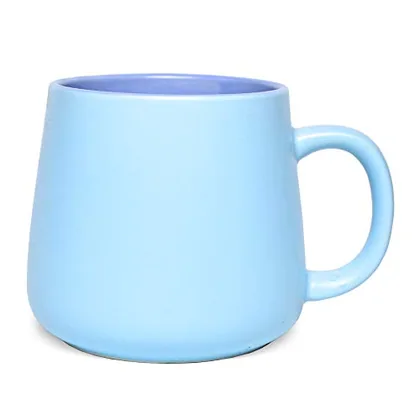
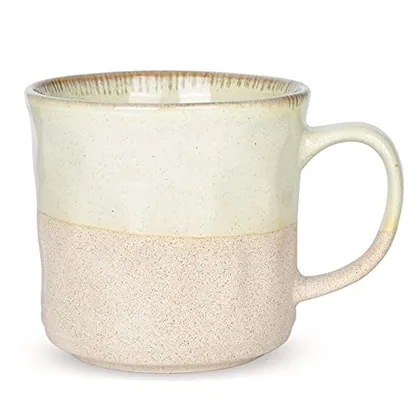
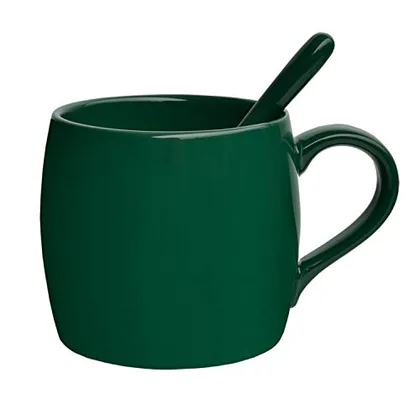
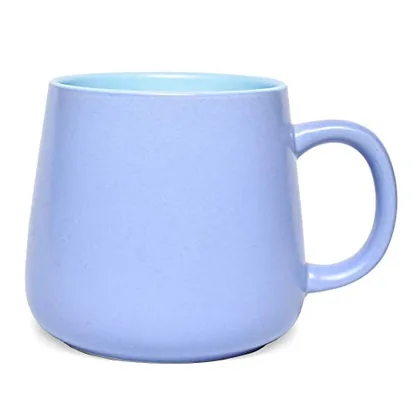
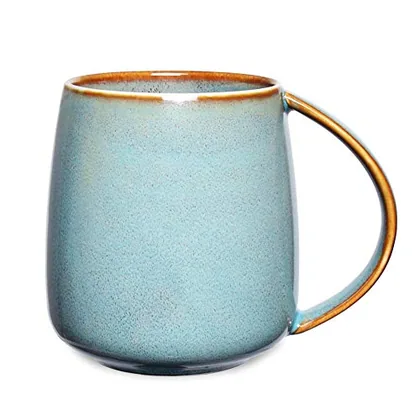
303 pieces of glazed stoneware Lead-free and cadmium-free, as stated on the range Prices updated 31 August 2026
BosmarlinGlazed stoneware for the table
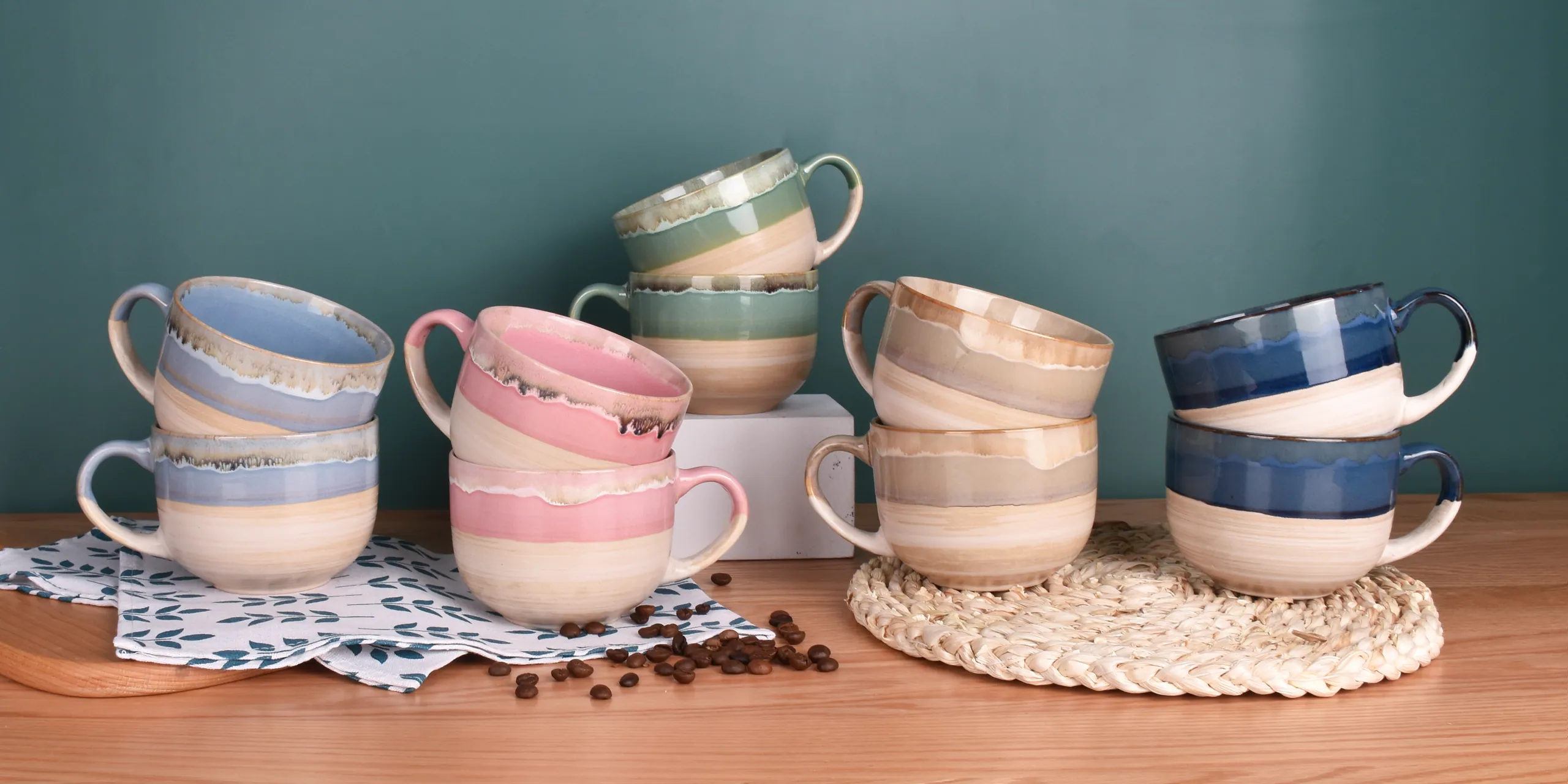
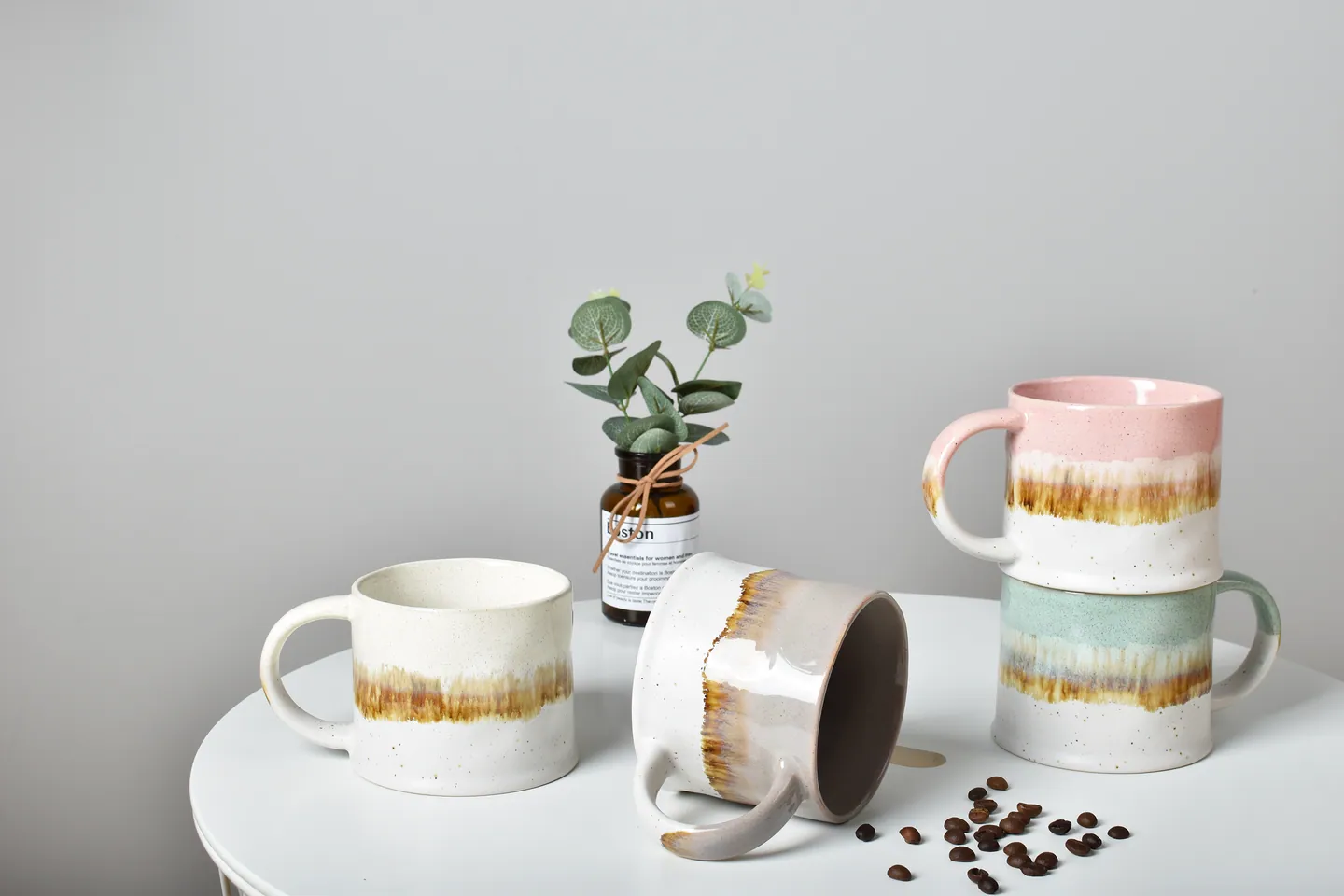
Bosmarlin mugs in reactive glazes on a wooden table

Glazed stoneware for the table

Every glaze finishes in the kiln

We make mugs, bowls and plates in reactive glazes that move while they are fired. We make 303 pieces across 9 departments, from an 8.5 oz cappuccino cup to a mug you can put 50 ounces of coffee in.

See all 303 pieces
4.60average across 116 ranges
44,783ratings behind them
303pieces in the range
$10.99where prices start

What Bosmarlin makes

Stoneware, glazed by hand, for the shelf you open every morning. We keep the number of shapes small and the number of glazes large, so a table can match without every piece being identical. 257 of our 303 pieces state the glaze they wear, and reactive is the one we are known for.

All pieces

Bosmarlin mugs to start with

The mugs people come back for, in the glazes we build on.

More mugs

The workshop

How Bosmarlin works

Two mugs out of one batch are cousins, not twins. The kiln draws the line where the colours meet, and it draws it differently every time.

We start with the clay body, not the colour

Stoneware is the whole reason a Bosmarlin mug feels the way it does. It is fired hard and dense, so it holds heat longer than a thin porcelain cup and shrugs off the knock against a tap that would chip something finer. It is heavier in the hand, and we think that weight is a feature rather than a cost: a mug that sits still on a desk is a mug that does not go over when a cable catches it.

The trade is that stoneware asks for a thicker wall and a wider foot, and both of those shape the pieces you see here. We do not make anything delicate. Everything in it is meant to be used on a weekday.
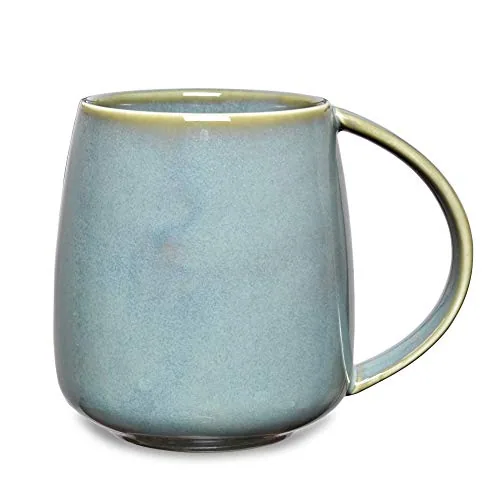
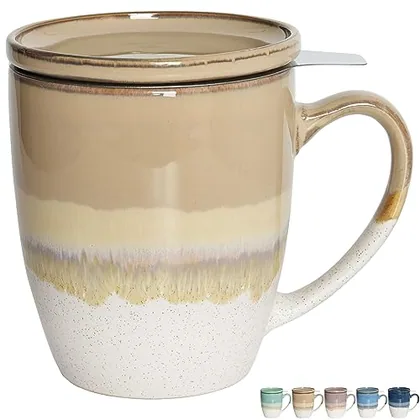
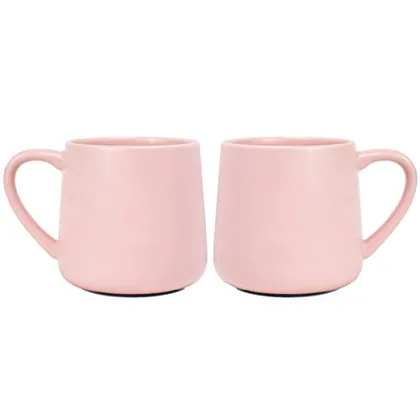
Matte Big-Handle Mug, 13 oz, Sage Green

The glaze is mixed to move

A reactive glaze carries mineral oxides that stay put at room temperature and travel once the kiln is hot. The band where two colours meet is not painted on. It is drawn by heat, by how thickly the glaze went on, and by where the piece stood on the shelf.

That is why the same Bosmarlin glaze can come out as a soft fade on one mug and a sharp break on the next. The photograph on a page is a fair picture of the glaze, not a portrait of the exact piece that arrives.
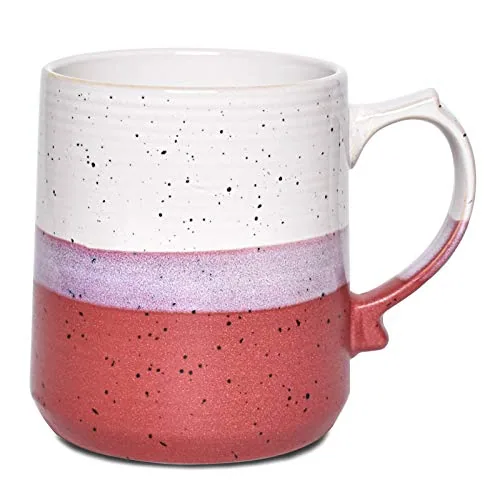
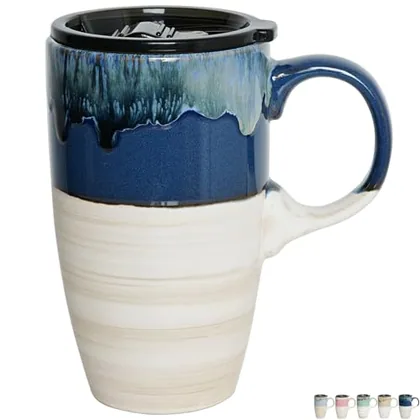
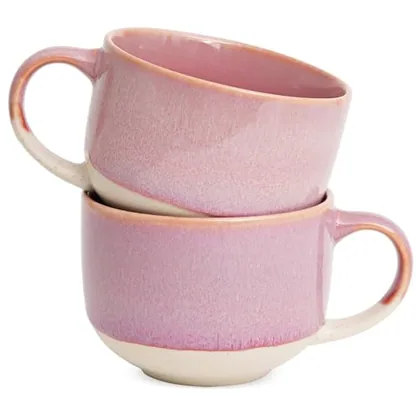
Reactive Big-Handle Mug, 21.5 oz, Carmine

Glazing is done by hand, and the foot is left bare

Pieces are dipped, then wiped back around the foot ring. The bare ring is not an oversight. Glaze is glass, and glass sticks: a piece glazed all the way down welds itself to the kiln shelf and comes off in pieces.

You can feel that ring on the bottom of every mug and bowl we make. It is the one part of a Bosmarlin piece that is still raw clay, and it is the quickest way to tell fired stoneware from something that was only painted to look like it.
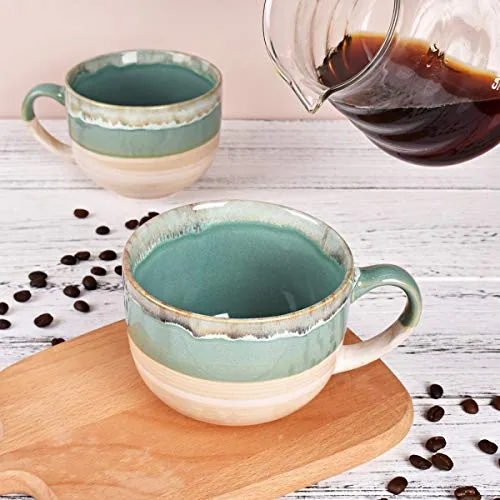
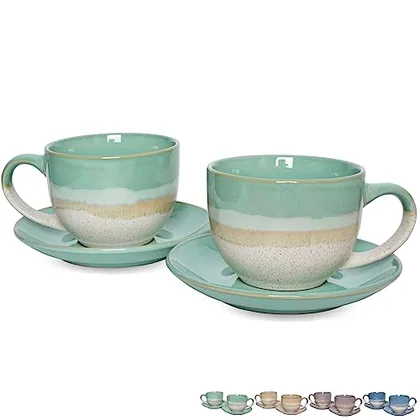
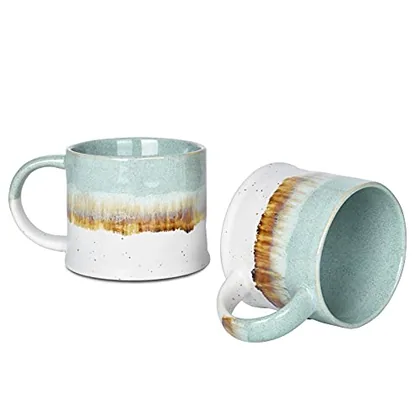
Latte Mugs, 16 oz, Set of 2, Green

Handles are big because full mugs are heavy

A 21 oz mug with coffee in it is a real weight, and a small handle turns that weight into a pinch between two fingers. Our large mugs carry a handle you can put a whole hand through, and the wide ones carry a low, deep pull rather than a narrow loop.

It is a plain piece of ergonomics that gets skipped often, and it is the first thing people notice when they pick one up.
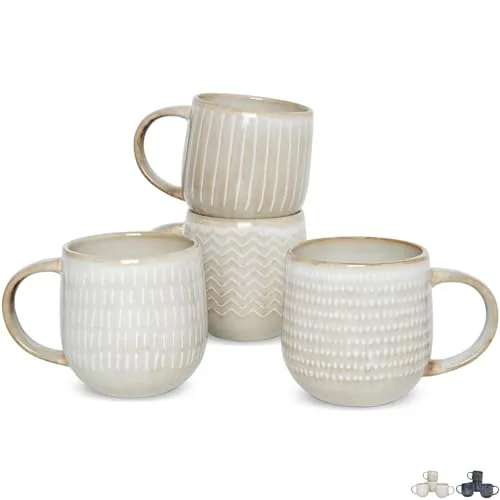
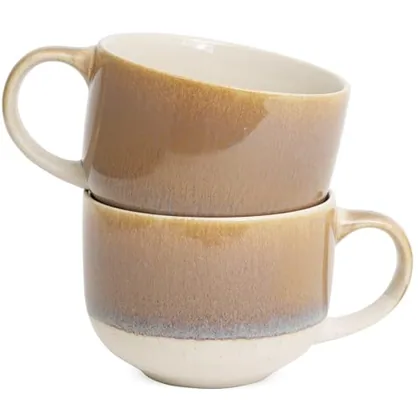
Reactive Big-Handle Mugs, 17 oz, Set of 4, Brown

Every piece is looked at before it is packed

Reactive glaze runs. Most of the time it runs the way we want it. Sometimes it pools at the foot, or it crawls back from an edge and leaves the clay bare where it should not be, and those pieces do not go out.

We would rather send a smaller batch than teach people that a Bosmarlin glaze is a lottery. The variation you get is the variation we chose to keep.
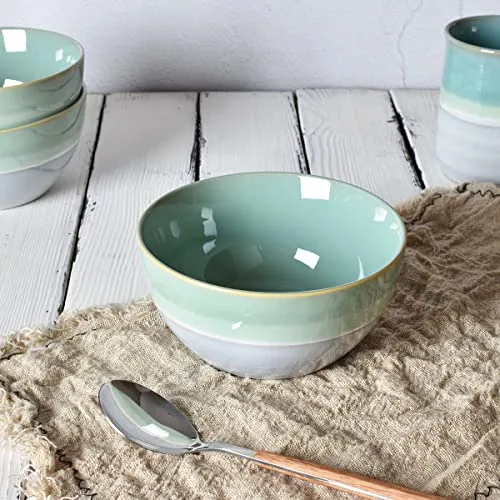
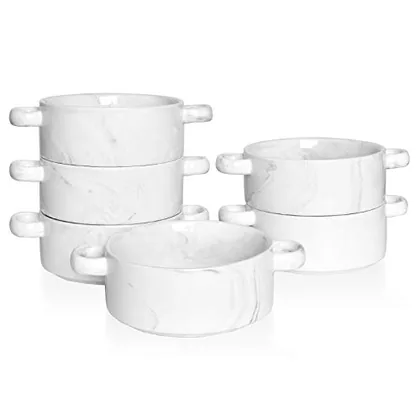
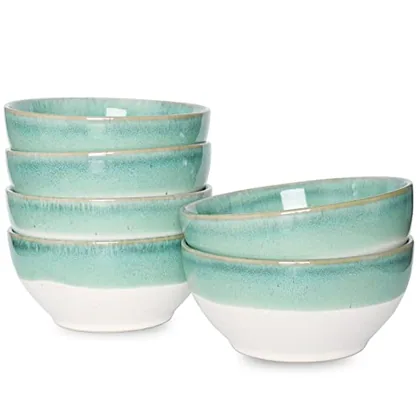
Reactive Soup Bowls, 26 oz, Set of 4, Mint Green

Which size is which drink

Capacity is the number worth checking before colour. A mug that is right for an espresso and a mug that is right for a mug of soup are two different objects, and we make both ends. These are the capacities we actually make, with what each one is comfortable for.

The size guide
CapacityComfortable forSizes we makePieces
0 to 10 ozEspresso, cappuccino, a small strong coffee8.5, 9, 1025
11 to 15 ozA standard cup of coffee or tea13, 13.5, 14, 1548
16 to 19 ozA large coffee, a latte, a bowl of cereal16, 17, 17.5, 18, 19120
20 to 25 ozSoup, a whole pot of tea, a mug you refill less20, 21, 21.5, 22, 23, 24, 2577
26 oz and upServing: pasta, salad, a dish for the oven26, 28, 30, 33, 38, 40, 5025

Stated capacity is to the brim. A mug filled to the brim is a mug that spills, so plan on roughly an inch less in practice.

Why two mugs are never twins

Reactive glaze is the whole character of this range, and it is worth understanding before you order. The oxides in the glaze move in the heat, so the firing finishes the line where two colours meet. Thickness, position in the kiln and the shape underneath all pull that line around.

About the glazes

What that means in practice: the piece that arrives will be the same glaze, the same shape and the same colours as the one photographed, and the pattern will be its own. Speckles land differently. A fade can sit higher or lower. On a set of four, the four will look like a family rather than four copies.

Fired hard

Stoneware fires dense, so it holds heat and shrugs off the knock against a tap.

Glaze that moves

Mineral oxides travel in the heat, so the firing draws the line between colours.

Handles for full mugs

A large mug carries a handle you can put a whole hand through.

Made to stack

Wide feet and even rims, so a shelf of them sits flat.

A Bosmarlin mug in a reactive glaze

Dishwasher and microwave

Stated on nearly every piece in the range, and true of the glaze rather than a hope.

No two alike

Speckles land differently and a fade can sit higher or lower on the next piece.

Lead-free and cadmium-free

As stated on the range. The care page spells out what that means.

Sized for real drinks

From 8.5 oz for a cappuccino to 50 oz for a mug of soup.

How many pieces a table needs

Sets are where we are cheapest per piece, and where most of it lives: 164 of our 303 products come as a set of two, four or six. The arithmetic below is the same one we do in the studio when someone asks what to buy for a household.

DepartmentPiecesSold in setsLargest setFrom, per piece
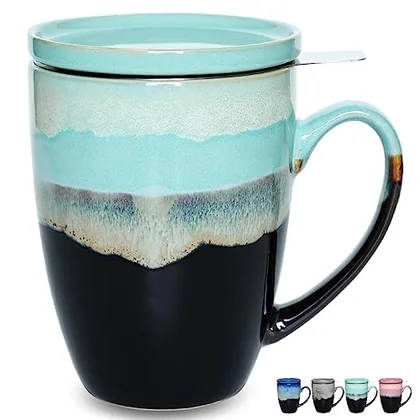
Tea Infuser Mugs430single$12.99
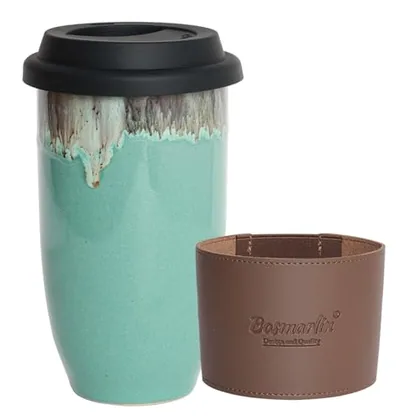
Travel Mugs130single$19.99
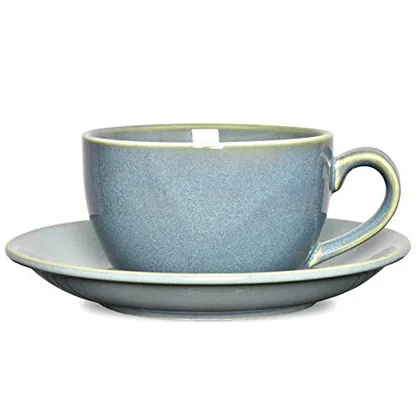
Cups & Saucers23222$7.00
Baking & Serving326$3.00
Mug Sets1021026$4.00
Oversized Mugs340single$10.99
Everyday Mugs4922$8.99
Bowls28286$4.33
Plates884$7.00

Everyday breakage is real. A household that uses its mugs daily will lose one every year or two, and a set with a spare in it is the difference between replacing one mug and replacing the look of a shelf.

Weight, handles and wrists

The largest mugs in the range hold 50 ounces. Full, that is a pound and a half of coffee before the mug itself, and it is why our big pieces carry a handle sized for a whole hand. If you have ever put down a large mug because your fingers ached rather than because the coffee was finished, the handle was the problem and not the size.

Oversized mugs

Bosmarlin mugs with large handles on a white table

Care that keeps the glaze

Almost every piece we make states dishwasher and microwave safe, and the glaze makes that possible. Fired glass over dense clay does not soak up coffee, tomato or detergent. The advice below is the ordinary kind, and we quote the parts that matter for health or for keeping a piece intact straight from the bodies that publish on them.

Care and safety
  • Let it come to temperature. Fill a cold mug with boiling water often enough and you are asking a fired body to expand faster on the inside than the outside. A rinse in warm water first costs nothing.
  • Stack with something between. Glaze is glass, and glass scratches glass. A cloth or a paper towel between stacked plates is the cheapest insurance there is.
  • Check a knock. A piece that has taken a hard knock can carry a crack you cannot see. There is an old test for it, and it works.
  • Skip the scouring pad. A green pad will dull a glossy glaze in a week. A cloth and warm water take off everything a mug picks up.

A gentle tap with a fingernail should make a “ping” sound; a dull-sounding tap is an indication of a crack or fracture that may not be obvious to the naked eye.

the Canadian Conservation Institute

When stacking glass or ceramic items for storage, place a cushion of soft material between each piece.

the Canadian Conservation Institute

Ceramic (pottery), enamel or glass cookware is easily cleaned and can be heated to fairly high temperatures.

Health Canada

Read 14 August 2026. Full list on the sources page.

Stoneware, porcelain and earthenware

Three words used loosely on the same shelf. They describe how hot the clay was fired and how much water it will still absorb, and that difference decides how a piece behaves in a dishwasher, in a microwave and against the edge of a sink.

Stoneware, what we make

  • Fired hot and dense, so it absorbs almost no water
  • Heavy in the hand and stable on a desk
  • Chips are rare, and a chip does not soak up coffee
  • Holds heat noticeably longer than a thin cup

Porcelain

  • Fired hot too, but thrown thin and light
  • Elegant, and far easier to chip on a tap
  • Cools faster because there is less body to hold heat
  • Usually sold as a full service rather than by the piece

Earthenware

  • Fired lower, so the body stays porous
  • Depends entirely on its glaze to hold liquid
  • A crazed or chipped glaze lets the body absorb
  • Lighter and cheaper, and shorter lived in daily use

The three words describe firing temperature and how much water the fired body still takes up. Everything else follows from that.

Bosmarlin sets for a table

Matching pieces in one glaze, which is where we are cheapest per piece.

More sets

How our pieces compare

Not with another badge, but with what usually goes wrong when stoneware is bought on a photograph.

What mattersBosmarlinWhat people run into otherwise
MaterialGlazed stoneware throughout, fired twiceThin earthenware that chips at the rim within a season
CapacityStated on 295 of 303 pieces, 8.5 to 50 ozA photograph and no number, so the mug arrives smaller than it looked
Everyday use302 pieces state dishwasher and microwave safeHand-wash only, discovered after the first cycle
Glaze safety281 pieces state lead-free and cadmium-freeNo statement at all, and no way to ask
Handle161 pieces are built with a full-finger handleA loop that fits two fingers and tips when the mug is full
Matching a setOne shape in many glazes, so a shelf agrees without being uniformA set that matches only until one piece breaks and is gone

Before you buy

The questions that actually stop people, answered from what our own range states.

Is Bosmarlin a real brand, or a page in the middle?

Bosmarlin is a ceramics workshop with a deliberately narrow range: 303 pieces, 22 shapes, the rest of the variety in glaze. This site is our own catalogue of it. We are not a checkout, though: ordering, payment, delivery and returns happen with the retail partner, and the disclosure at the foot of every page says so.

Where are the pieces made, and where does the parcel come from?

Our pieces are made in small batches: the clay is chosen for weight and hardness, shapes are thrown and bisque-fired, then glazed by hand and fired a second time. We describe the work and we photograph the results, and the pieces are left to speak for the rest. The parcel itself is dispatched by the retail partner you order from.

How do returns work, and how long do I have?

Returns are handled where you place the order, not here. That also means the return window is theirs to state: it appears at checkout and in the order confirmation, and it can differ by country and by who ships the parcel. We deliberately do not print a number for it on this site, because a figure we cannot honour is worse than an empty space.

Which size should I pick, and what do the ounces mean?

Capacity is the figure that matters and we publish it wherever the piece states one: 295 of our 303 pieces carry it, and the range runs 8.5 to 50 oz. A standard coffee mug sits around 11 to 12 oz, a generous breakfast mug around 15, and anything past 20 is the size people buy for soup or for a morning that needs no refill.

Is the glaze safe? What about lead and cadmium?

281 of our 303 pieces state lead-free and cadmium-free glaze, and where a piece does not state it we leave the row empty rather than assume. Beyond our own range, the safety of glazed pottery is a documented subject, and we quote the national guidance verbatim with the dates we read it on the care page. Nothing here is medical advice.

Can they go in the dishwasher and the microwave?

302 of the 303 pieces state both dishwasher and microwave safe. The oven is a different question: only 2 pieces state oven use, and unless a piece says so on its own page we would not put it in one. Sudden temperature changes are what break stoneware, so the habit worth keeping is to warm a cold piece with hot water before filling it with something boiling.

Why do two pieces in the same colour look different?

Because the glaze is reactive. It carries mineral oxides that move while the kiln is hot, so the boundary between two colours is finished by the firing rather than by a brush. Two mugs from the same batch share a family resemblance rather than an identical pattern, and pieces bought months apart will differ more. If you want an exact match across a set, buy the set together rather than one piece at a time.

What if a piece arrives damaged, and is there a warranty?

Ceramics travel badly when they are packed badly, and a piece that arrives cracked is a delivery problem: raise it with the retail partner who shipped it, because they hold the order and the money. We do not issue a warranty of our own and we are not going to imply one. What we will do is answer questions about the pieces themselves at the address on our contact page.